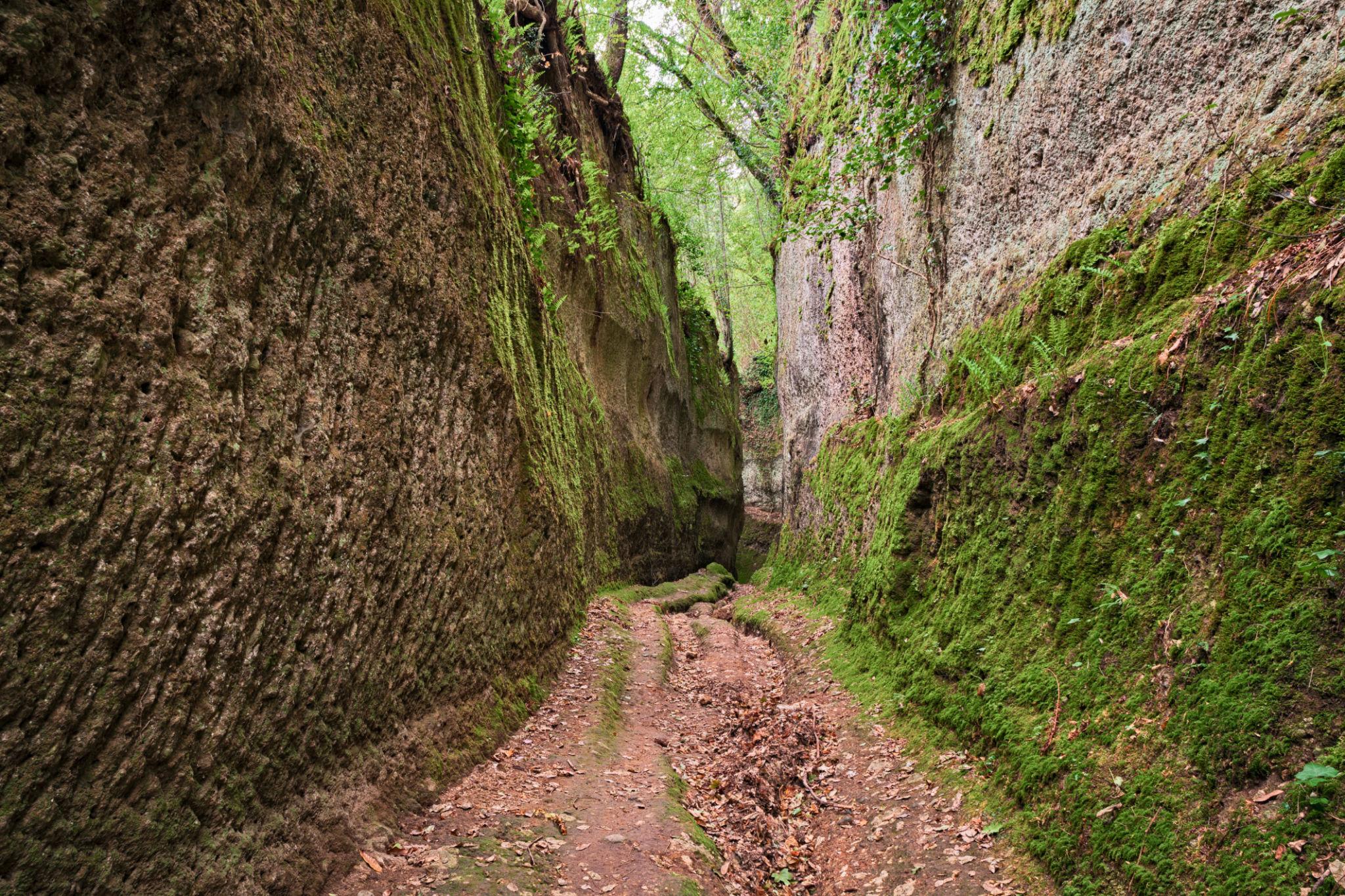
Walking between towering walls of tuff rock, with the sky reduced to a narrow strip overhead, is a remarkable way to discover inland Maremma. The Vie Cave of Pitigliano, Sorano and Sovana reveal how past communities shaped a volcanic landscape. This guide introduces their history and helps you plan a thoughtful visit.
What are the Etruscan Vie Cave?
The Vie Cave are ancient sunken roads carved into tuff rock. Many date back to Etruscan times and were used and altered over subsequent centuries. They connect plateaus, valleys, settlements and burial areas. The original purpose of each route is not always known: transport and possible ritual functions have both been suggested, but no single explanation applies to every path.
Tuff is relatively workable, allowing deep passages to be carved into the landscape. Along the way you may notice engravings, traces of human activity and vegetation sheltered by the shaded walls. Avoid touching or marking the rock: even inconspicuous details belong to the historic heritage.
The Vie Cave of Pitigliano
Numerous routes surround the town, including San Giuseppe, Fratenuti, Poggio Cani and Gradone. San Giuseppe is a name worth knowing for first-time visitors. Poggio Cani reflects the relationship between the historic centre and the valleys below, while Gradone is associated with the Alberto Manzi open-air archaeological museum.
When choosing a walk, consider elevation changes, surface conditions and your return route as well as distance. Combine your walk with a visit to Pitigliano's historic centre, leaving time to appreciate its architecture and local traditions.
The Vie Cave of Sovana and the Etruscan necropolises
In Sovana, the sunken roads are closely associated with ancient burial grounds. Cavone and San Sebastiano are among the area's best-known historic paths. The necropolises also reveal how tuff was used to create monumental tombs, including the famous Ildebranda Tomb.
Some routes lie within archaeological areas subject to opening hours, admission charges and restrictions. Check access conditions before setting out: a path shown on a map is not necessarily open. Complete your visit with a stroll through Sovana itself.
Sorano and the tuff landscape
Sorano offers another perspective on the region, with houses, fortifications and rock-cut paths set among valleys and rocky ridges. San Rocco is historically associated with Sorano's Vie Cave. Check locally which sections are accessible and never cross barriers or ignore closure notices.
Planning your visit
How much time should you allow?
If you have only a few hours, focus on one open route and one village. With a full day, combine a walk with an archaeological visit, leaving time for travel and breaks. For a longer stay, read our three-day Maremma itinerary.
What to bring and when to go
- Walking shoes with good grip, water and suitable clothing.
- An up-to-date map and charged phone.
- Weather, access and difficulty information before departure.
Spring and autumn are often pleasant for walking. Shaded sections can feel cool in summer, but approach paths may be exposed to the sun. Avoid sunken roads during heavy rain or thunderstorms and after events that may have destabilised rock walls or made the ground slippery.
Visiting with children and guided walks
Not every route suits young children, pushchairs or visitors with limited mobility. Choose a walk that meets the needs of your group. A guide can help explain markings in the rock and the archaeological context. Browse the experiences available in Maremma to plan your visit.
A journey through history, nature and local flavours
The Vie Cave also invite you to slow down and observe the landscape. If you enjoy gentle woodland walks, read our guide to forest bathing in Maremma. For other hiking ideas, explore the trails of the Tuff Towns.
Plan your stay using our local area guide and directory of local businesses, from accommodation to restaurants and producers. Make time for the villages and their flavours as well as the trails.
Frequently asked questions
Are the Vie Cave free to visit?
It depends on the route. Some sections lie outside archaeological parks, while others are within areas with regulated admission. Always check official information.
Can you visit them all in one day?
It is better to choose a few stops and explore them properly rather than trying to walk every route in a single day.
Further reading: Visit Tuscany – The Vie Cave and Visit Pitigliano – Vie Cave.
Leave a comment